Camera Systems
Is Your Business DVS Ready?
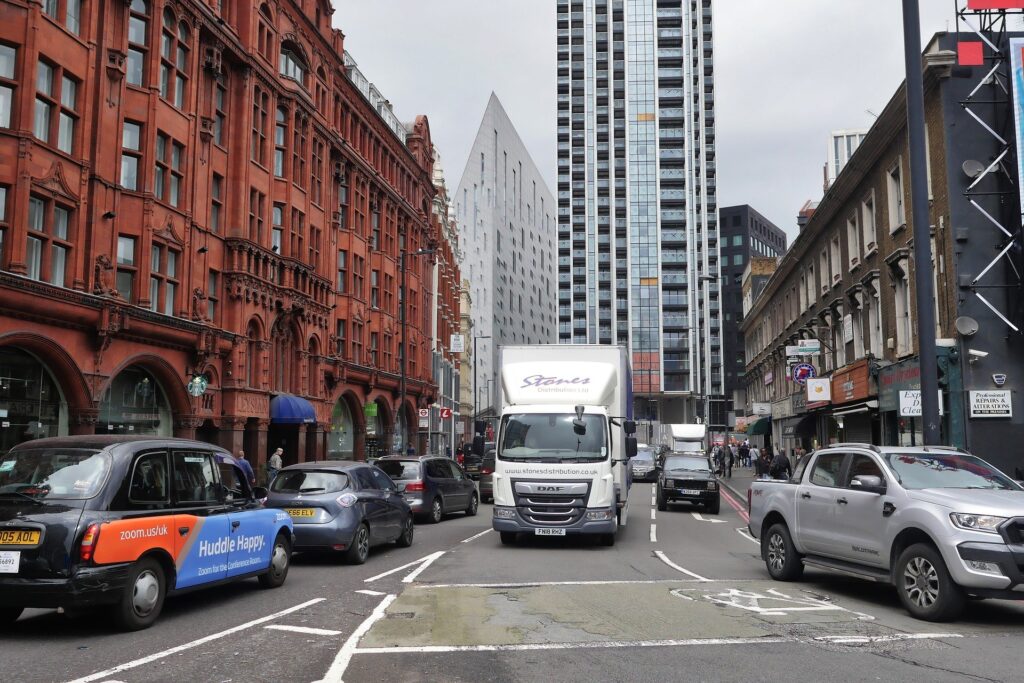
What is Direct Vision Standard and how it affects you as a Fleet Operator
The Direct Vision Standard (DVS) is the first legislation of its kind, originally scheduled to have come in to effect From 26th October 2020 but due to disruption caused by the COVID-19 pandemic has been pushed back to 1 March 2021 to give businesses more time to meet DVS requirements.
However, if your vehicles aren’t DVS compliant, you should book in fittings NOW to ensure that your vehicles are fitted in time for March.
The Direct Vision Standard was designed to eliminate blind spots from HGVs and reduce their risk to cyclists and pedestrians. Many cyclists are at risk of serious injury or worse when they ride next to the near-side (passenger side) of HGVs that are turning left. As drivers of HGVs are higher up than drivers of smaller vehicles, they can be unable to see a cyclist on their near-side and accidentally turn left or change lanes into them.
By increasing driver visibility, the Direct Vision Standard will reduce the risk of close-proximity blind spot collisions, equip drivers with the tools they need to manoeuvre safely and stop injuries to vulnerable road users.
The Direct Vision Standard objectively measures how much a driver can see through their cab windows and mirrors, and how big the resulting blind spots are. It uses a star rating to grade HGVs from zero (lowest) to five (highest). Drivers in a zero-star vehicle will have poor direct vision and will not be able to see the head and shoulders of a pedestrian who is less than 4.5m away from the cab side. Drivers in a five-star vehicle will have good direct vision and will be able to see pedestrians, motorists and cyclists who are directly next to the Cab side of their Vehicle

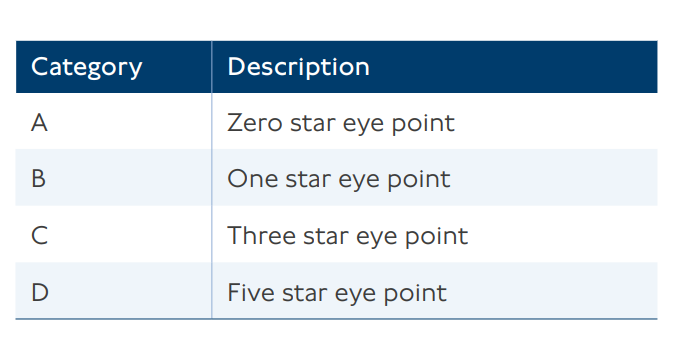
DVS star ratings are available from vehicle manufacturers. You should check the star ratings for your HGVs now to see if you need to take any action and implement a ‘Safe System’.
From 1 March 2021, all HGVs will require a minimum of one star to be granted a Direct Vision Standard safety permit. In 2024, the minimum star rating will be raised to three. Zero-star vehicles will not be granted a permit unless they meet ‘Safe System’ requirements outlined by DVS.
Looking for help to get your fleet DVS ready? Contact PRS today
The Importance of Driver Behaviour Monitoring
Not monitoring your drivers behaviour?
Bad habits such as speeding, harsh braking and over-acceleration are not only increasing the cost of running your fleet but, more significantly are contributing to road traffic incidents.
PRS Telematics main focus is fleet and driver safety, we utilise industry-leading connected technology across a broad range of sectors to assist our you in improving the following areas;
- Driver Safety
- Occupational Road Risk exposure
- Fuel Spend
- CO2 Emissions
- Vehicle Maintenance Costs
- Insurance Premiums
Our behaviour management and compliance solution will work alongside your existing telematics provider or bolt onto our own industry leading range of connected telematics and camera technology. Not only can you help improve driver behaviour but you can save money
Contact us today on 0330 400 4321 or email us at enquires@prstelematics.com to find out more!
Engineers & Salespeople Top List of Telematics Users

A recent study by Arval Mobility Observatory’s 2019 Barometer shows that engineers & salespeople top the list of drivers using telematics.
The 2019 study of almost 4,000 businesses, covered various questions about fleet and mobility trends.
The study’s results showed that engineers (54%), salespeople (30%), perk car drivers (28%) and delivery drivers (28%) had telematics equipment fitted to their vehicles.
The research also showed that unsurprisingly telematics adoption was higher in larger organisations
Despite falling costs and easier than ever implementation there is still an obvious disconnect between SME’s and telematics.
A total of 47% of businesses with more than 1,000 employees are using telematics, compared to 45% of 100-999 employees, 39% of 10-99 employees and just 3% with fewer than 10 employees.
The Arval Mobility Observatory research concluded by looking at differences between company car and LCVs in why businesses adopted telematics but found few.
The top three responses were to locate vehicles (car 49%, LCV 56%), to improve driver behaviour (car 41%, LCV 44%) and to improve driver safety (car 33%, LCV 35%).
The study suggests that this technology provides benefits whatever vehicle it is implemented within.
Are you interested in tracking your fleet or just want to have a look at another tracking solution? Contact us today on 0330 400 4321 or email enquiries@prstelematics.com for more information
5 Reasons to Consider Investing in a Vehicle Camera System
5 Reasons to Consider Investing in a Vehicle Camera System
In today’s crash-for-cash climate, the presence of vehicle cameras is a rising trend that hasn’t gone unnoticed. From simple forward-facing dash-cams, to full multi-channel DVR solutions, installing a camera solution not only protects your drivers against any false allegations, but can also result in a range of additional benefits, from improved driving behaviour and lowered insurance premiums.
But the benefits don’t stop there. Have a read of our top 5 reasons why you should think of investing today…
1. PROTECT YOUR DRIVERS WITH INDISPUTABLE EVIDENCE
According to Aviva they have seen a 9.5% yearly increase in the number of fraudulent claims in recent years. With industry figures showing 1 in 10 personal injury claims are linked to suspected crash-for-cash schemes, it is important to have evidence to support your claim. The presence of in-vehicle cameras, or “dash cams” not only deters fraudsters from targeting your vehicle but also provides accurate and admissible video evidence of any incident.
“NOT ONLY HAS THE GENERAL LEVEL OF SAFETY FOR OUR DRIVERS IMPROVED, WE’VE ALSO BEEN ABLE TO SAVE ON COSTS BECAUSE OF REDUCED UNNECESSARY INSURANCE PAYMENTS.” STEVE NEWTON – BOUGHEY DISTRIBUTION TRANSPORT MANAGER
4. FUEL SAVINGS & REDUCED WEAR AND TEAR
A lesser known benefit of vehicle camera solutions is the potential for cameras to save your company money in day-to-day fleet costs. After speaking to Transport Managers at our latest camera forum at the beginning of March, it was made clear that after having cameras installed into their commercial vehicles, driver’s adopted a different mindset. The opportunity to be praised for great driving, defend themselves from claims and knowing they have a live witness on-board creates a more conscious driver that was mindful of their driving behaviour, resulting in reduce fuel usage and less wear and tear on the vehicles.
5. PERSONALISED FEEDBACK/TRAINING
When it comes to improving driver performance, camera footage of driver’s reactions can be invaluable as it creates a feedback/training approach that is driver specific. By downloading and watching the footage with your drivers and using the camera’s detailed g-force and accelerometer data, you can quickly identify specific areas for improvement and create targeted incentive programmes for them.
A complete guide to SD vs. 3G/4G Fleet Camera Systems
A complete guide to SD vs. 3G/4G Fleet Camera Systems
Trying to find the right vehicle camera system for your fleet can be a lot like trying to buy the right car: there are a lot of models, variations and qualities to choose from but unless you know what you need in a system you don’t know what to look for and what to avoid.
With the recent “dashcam boom” there are now so many different options to choose from that sometimes it can get a little overwhelming. So we thought we’d take it back to basics and look at the main difference between what’s on offer; SD vs 3G/4G.
Why are you looking at cameras?
Before you start to weigh up your options, you need to establish why you are looking for a camera system in the first place. Is your company looking at cameras for evidence against insurance claims? To help with driver training and keep costs down? Or maybe company compliance is the biggest factor? Both SD and 3G camera systems can help with all of the above, but there are crucial differences in terms of ease-of-use, cost and reliability between the two solutions.
Access to footage
The main distinction between the two types of vehicle camera system. SD card based cameras require you to physically retrieve the SD card from the camera and plug it into a reader on your computer to download and view the footage. If your fleet consists of a small number of vehicles who return to the base every evening, then checking the SD cards is an easier feat. But if your vehicle’s are out on the road for days, or weeks at a time without returning to base, then there may be the possibility that the footage will have been overwritten due to the limited storage capacity of an SD card.
Vehicle cameras with an on-board 3G/4G sim not only send an instant SMS/email alert notifying you of any detected incidents, but also enable remote access to the camera allowing footage to be remotely downloaded and saved instantly. Alongside ensuring that no footage is ever lost, it also means that you can provide your insurers with FNOL (First Notification of Loss), speeding up any claims process and potentially even reducing your overall insurance premiums.
Reliability
When one of your vehicles has been involved in an incident and it’s your drivers word against the other, having the inadmissible footage from your vehicle camera will provide the accurate evidence needed to ensure a fair distribution of blame. Both camera solutions can provide reliability…but only if they are working properly.
Not only are SD cards renowned for being prone to corruption (with manufacturers recommending reformatting every 2 to 6 weeks), they are also very easy to remove by the driver should they wish the footage to be ‘lost’.
The instant download capability of 3G cameras negates these issues, and the live wireless connection to the camera also enables regular automated remote health checks by the provider meaning that lost footage is a thing of the past!
Cost ££
The key feature of SD based camera systems is how cost effective they seem at first glance. With SD dashcams being sold everywhere – even in petrol stations, they are cheap to purchase and easy to get hold of. However, with the risk of corruption and the need to replace SD cards regularly, the extra costs from replacement hardware and vehicle downtime can add up quickly.
3G cameras have a larger upfront hardware cost, plus the added monthly data charge, however, with remote access to the footage there is no need to bring your vehicles back to base, minimising vehicle downtime and saving on fuel costs. Providing your insurers with FNOL can also have a big impact on reducing your insurance premiums.
And finally….Do your research
With such an extensive range of camera systems on the market it can often be a little overwhelming for fleet operators to know what will suit their fleet requirements best. Take the time to sit down and create a list of everything that you need out of your camera system. Does it need to be FORS compliant? Do you need 360o coverage around the vehicle? Are you vehicles away from base for long periods of time? How much do you want to spend? Will your insurers contribute?
We’ve put together a little summary table to hopefully help answer some of these questions:
SD | 3G/4G | |
Cost effective | Yes | Yes – dependant on number of cameras fitted plus monthly data costs for the sim |
Recording Time | Up to 38 hours before the footage starts being overwritten | Up to 3 months storage. Also the option for live viewing. |
Risk of Lost Footage | High – SD cards are prone to corruption and have no ability to perform health checks. | Low – can perform health checks at any time. Captured incidents are also sent to the end user instantly for immediate download. |
Amount of Cameras | Up to 2 | Up to 24 |
Durability/Reliability | Low – storage size decreases over time. SD cards require reformatting every 2-6 weeks and are highly prone to corruption. | High – remote health checks can be performed regularly. |
Ease of Access | Low – footage can only be accessed by removing SD from vehicle and downloading onto a computer. | High – footage can be remotely downloaded at any time or viewed live. |
Tamper-proof | No – easy for drivers to remove SD card | Yes – footage is automatically remotely downloaded. Hard-drive based camera systems are also harder to tamper with. |